There is so much to be learned about the cycle of life and death in nature—
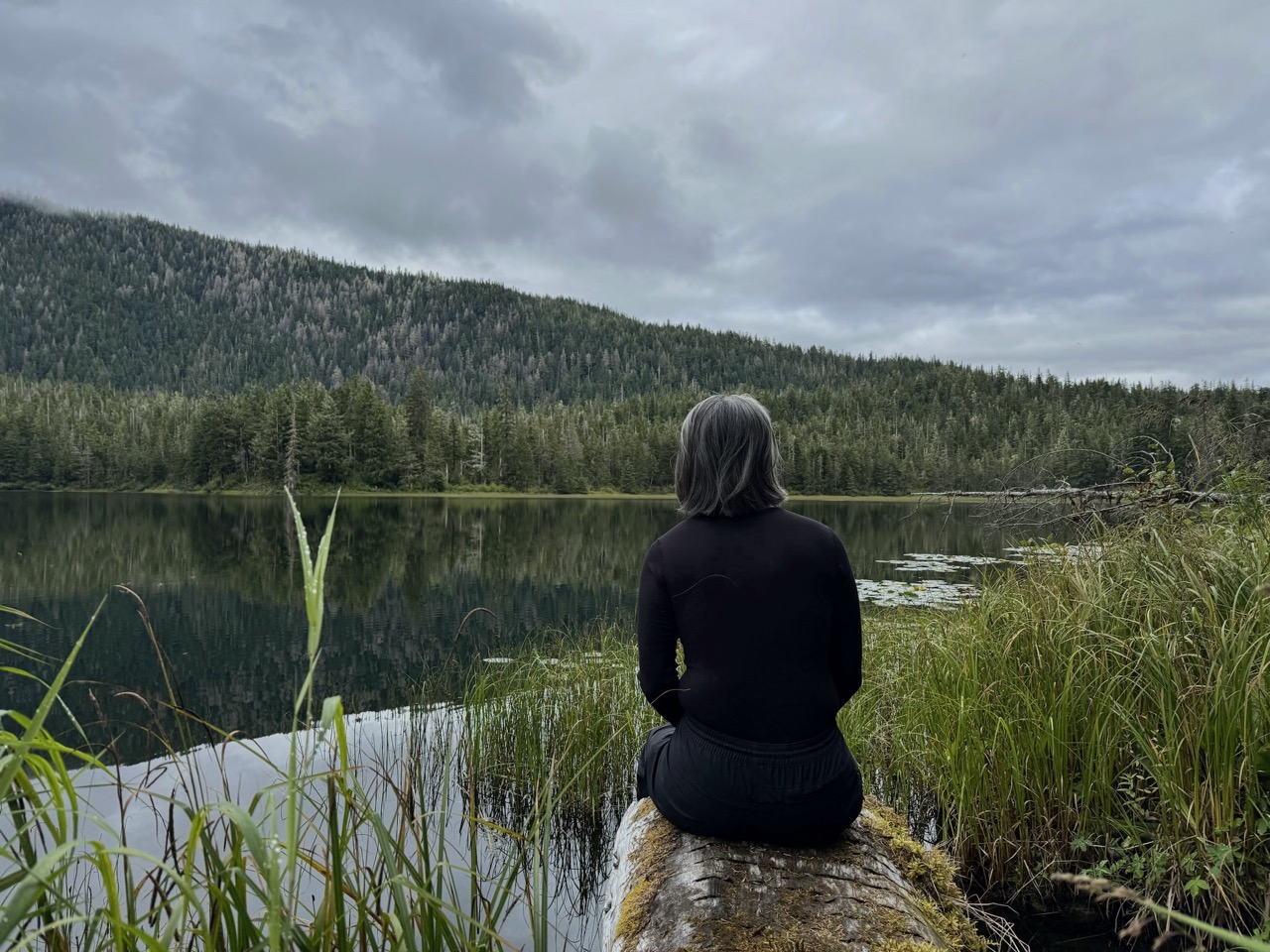
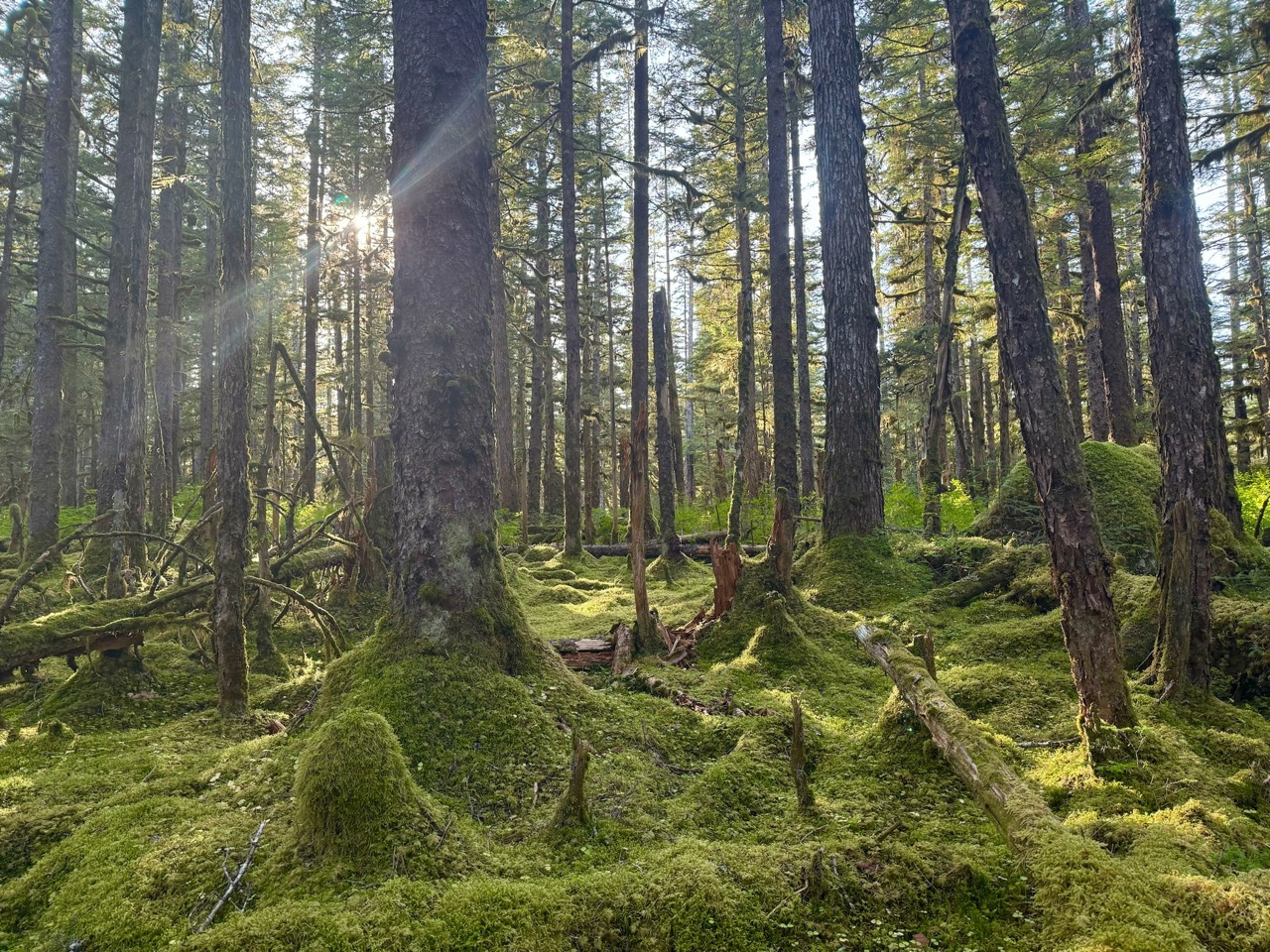
The shallow roots of the Sitka spruces and Western hemlocks lie twisted and gnarled like arthritic hands. Their fingers rise up to entrap me, catching my boot causing me to stumble many times. A bulbous knuckle, a hidden hole, a spikey branch. I struggle to pass, feeling like an ant lost in a mass of discarded fishermen’s nets. I am sweating from the exertion and stop to remove a layer. The air is damp and chill. It was not so long ago that the grounds were thickly covered with heavy snows and will soon be again.
As I regard the lands around me, there is majesty and awe in its existence. While it feels ancient here, the local guide tells me that this area is not virgin forest. Southeast Alaska was heavily lumbered during the 1800’s by the shipping, mining and fishing industries. According to the United States Forest Service, the biggest, best quality and most accessible trees were cut first throughout the forest. Eventually with steam-powered technologies developed in the 1920’s, loggers could reach stands of trees close to three-quarters of a mile inland. Later, large-scale industrial timber development accessed all forested areas. Therefore, very few large trees standing today are older than 200 years old. Fortunately, the economy of the Southeast has transitioned from timber to forest with significant economic benefits in restoration and stewardship. Thus, the forest has rejuvenated and persisted, even after its resources were ravaged by man.
With an awareness of the damage and suffering of this land, I do not want to be an intruder or be perceived as a harm to the native environment. I want to be a guest and move with respect and reverence for the rebound of the land and the natural beauty it now offers. With a new appreciation for all that is around me, there is now an ease and slowness in my movements. That tree knot does not seek to trip me but is a handhold to offer support. I step over with care and duck under with grace. And I try to take up as little space as possible and move with the flow and energy of the forest.
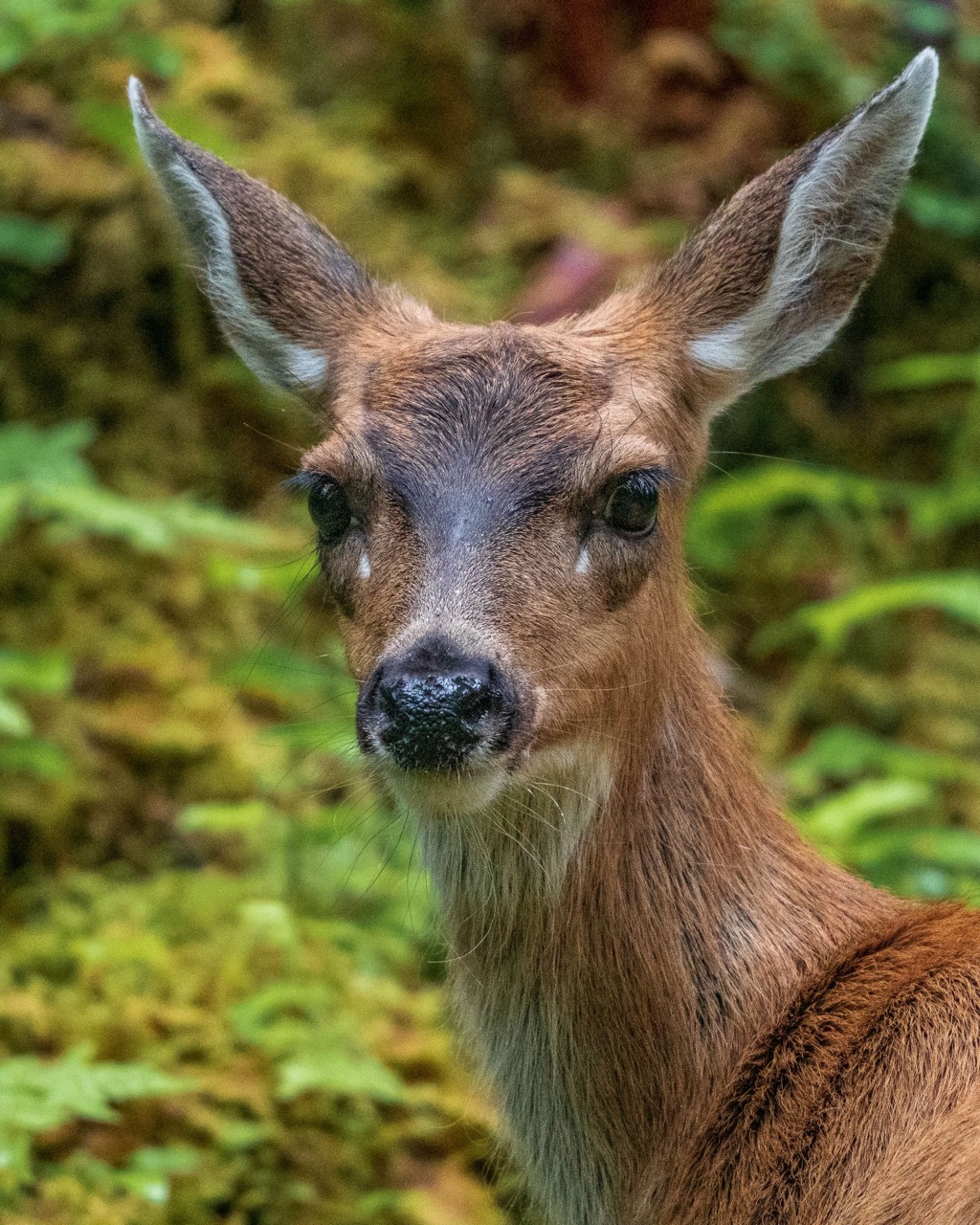
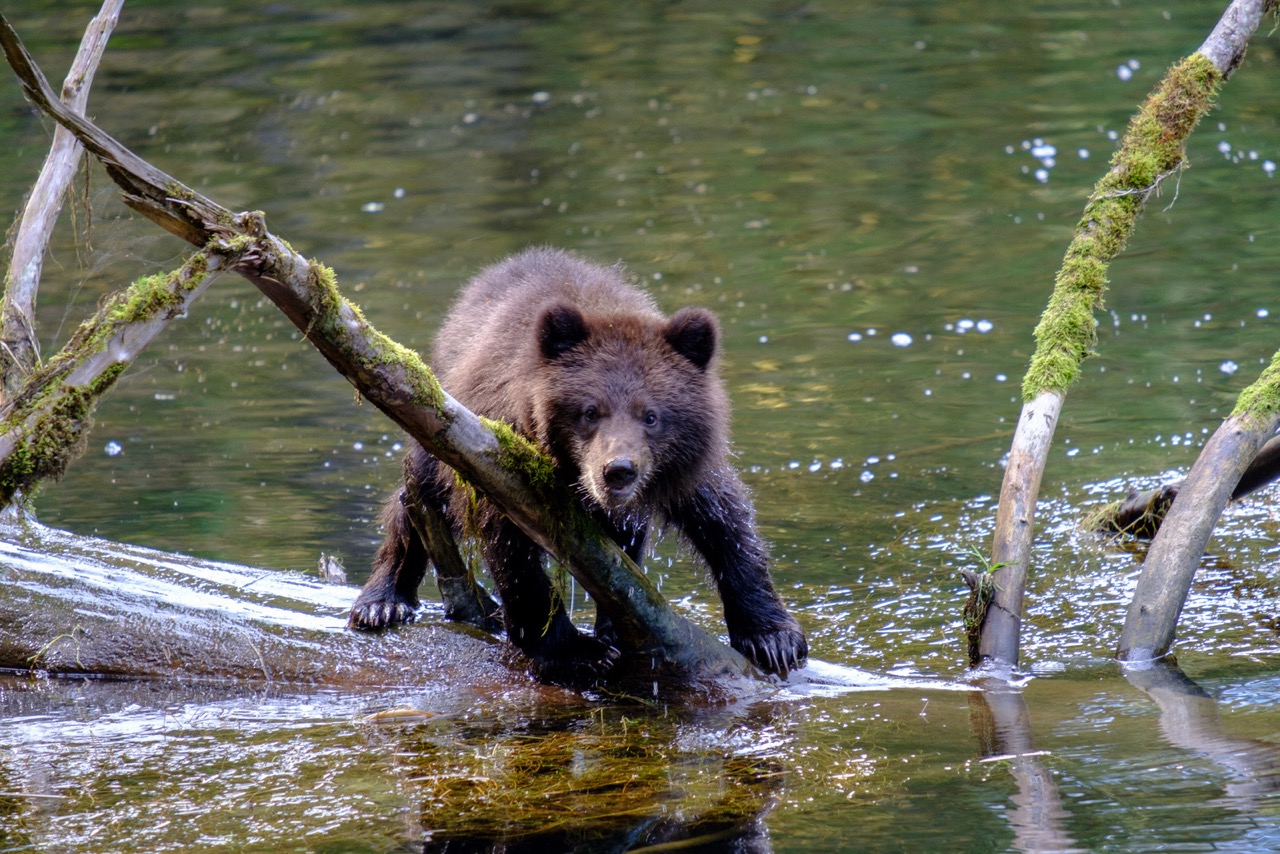
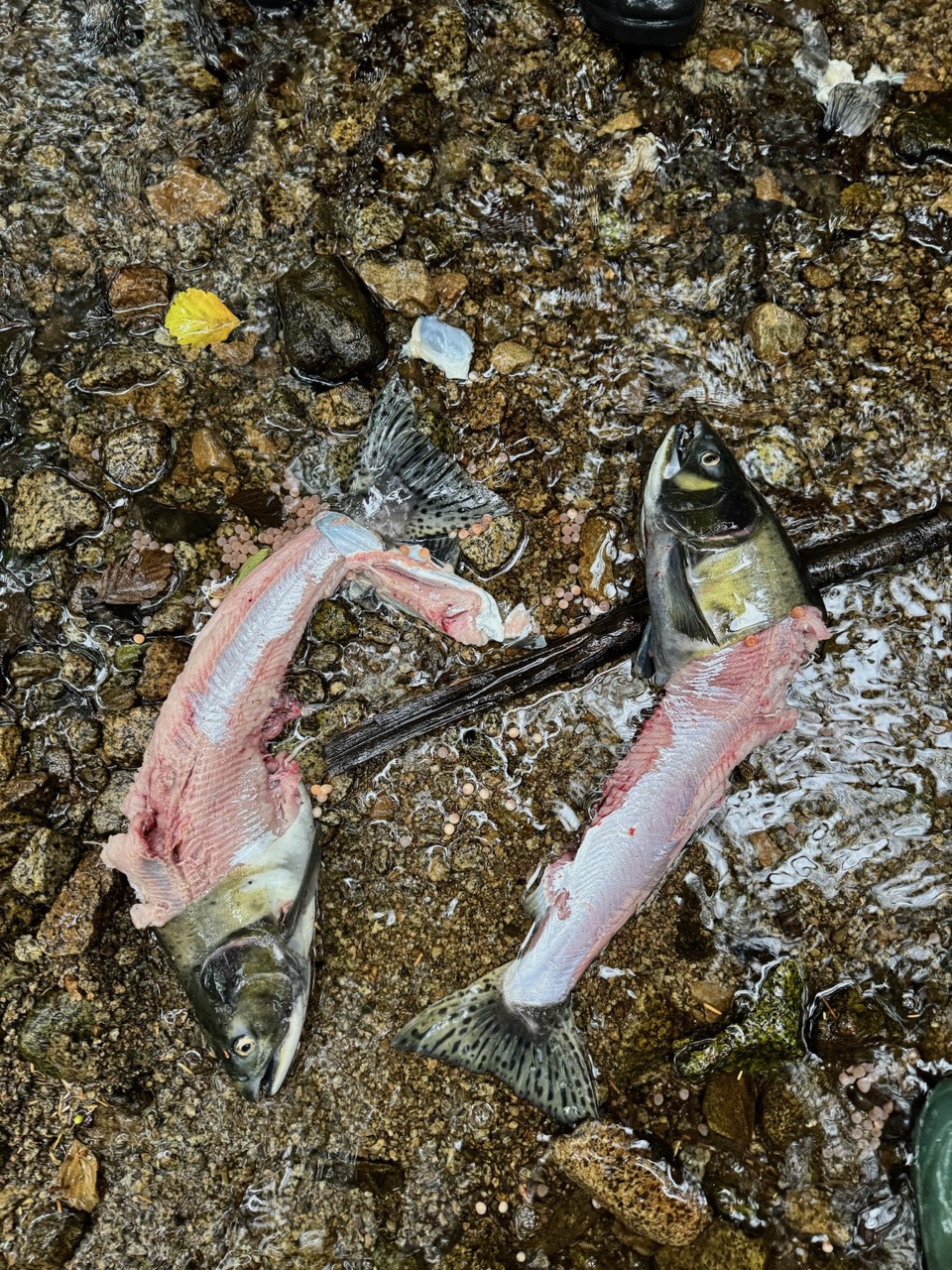
There is so much to be learned about the cycle of life and death in nature—as in the temperate rainforest before my eyes. The lifespan for any region’s flora and fauna is unknown and dependent upon so many other factors. To thrive, most plants and animals live within very specific climate conditions, governed by temperature, sunlight and rainfall. Given the short summer season in Alaska, it is to the environment’s advantage to flourish while staying in balance. All components of the rainforest are interconnected and influence each other, creating mutual benefit and balance. After a wolf takes down a Sitka deer, the carcass remains to feed others, both large and small. The dead animal’s energy is redistributed to the birds which scavenge, and the insects and fungi which aid in decomposition. While a salmon spends most of its life in the sea, it brings ocean-based nutrients to the rivers and land. When the salmon returns to spawn upriver, it can be eaten by a bear in its journey upstream or dies after releasing its eggs in its final act of procreation. Ecosystems are really a cycle of life and death. In fact, ecosystems need death to maintain balance and be self-sustaining. Wildlife live with the threat of death all the time. If you watch animals in the wild, you see that they do not want to be eaten. The chipmunk is twitchy, ready to run for its life. Fish dart away at the slightest ripple in the water. For animals in nature, an awareness of death is hard-wired into living. Humans, we have forgotten.
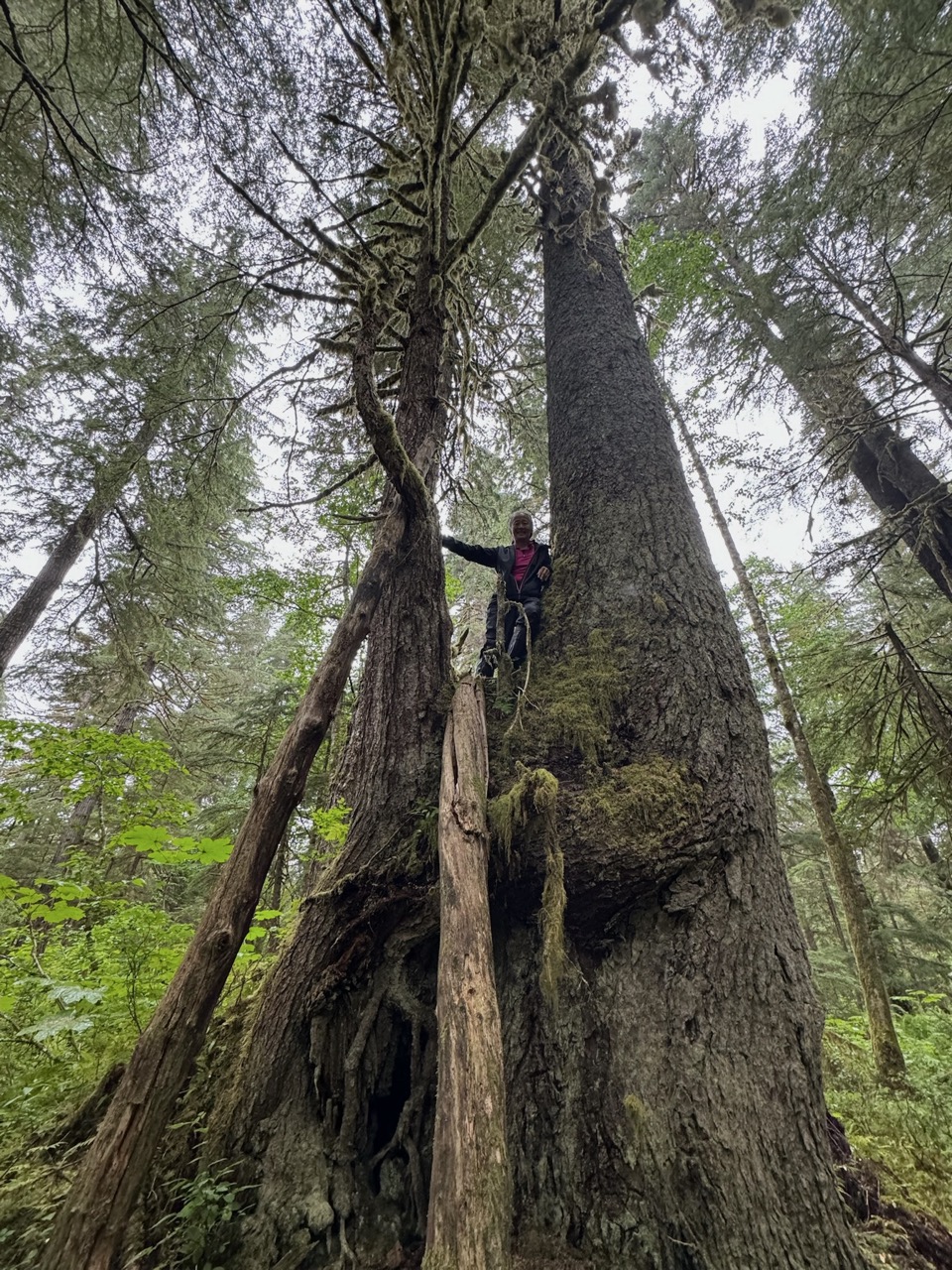
I come across a perfect example of symbiosis in nature. Two magnificent trees stand side-by-side, one a spruce and the other a hemlock. They soar together towards the sun and sky, seemingly shooting out of a single trunk. Their base is a large, cavernous tangle of roots like the mangrove trees I have seen in the tropics. The why of this particular phenomenon is that two seeds rooted side-by-side on a fallen tree. One seed a spruce, the other seed a hemlock. A third tree—the fallen tree—died and became the base and source of nutrition for these two seeds. The fallen tree is called a “nurse log” and represents one of my favorite concepts of life and death in nature. A nurse log is a fallen tree that serves as the growing site for young plants. As it decays, a nurse log offers seedlings shade, nutrients, water and protection from disease and pathogens. Essentially, the nurse log nurtures and provides for the next generation of trees. The spruce and hemlock seeds rooted, sprouted, became seedlings and then saplings, and grew together to maturity. Each thrived, growing to enormous heights. From observation, the nurse log itself must have been a huge tree. While it is no longer visible, the size of the voids at the base of the spruce-hemlock indicates a diameter of a few feet. The fallen tree is now completely decayed, returning all its organic matter to the earth, nourishing not only the spruce and the hemlock, but also many of the other rainforest creatures. Nothing remains of the nurse log, but in its place, two magnificent trees stand.
My body too will die. Can I nourish new life?
My mother-in-law lies in pasture. Upon her death, she was placed in a simple wooden box, buried in the ground, and a tree planted on top. There was an administrative mix-up; she had wanted a silver birch tree, but got a hazelnut instead. My father-in-law decided he wouldn’t fuss about it. At planting, the hazelnut sapling was a thin, fragile thing, a singular stick about two feet tall. A translucent plastic cylinder was placed around the stalk as protection from hungry ground animals and the like. Fortunately, the sapling did not get eaten or die over the years. And today, the hazelnut is doing well. It is over six feet tall with smooth grey-brown bark and has branched out with heart-shaped hairy leaves.
My father-in-law will die soon and then another tree will be planted. He will be buried in the plot next to his wife and has requested a silver birch tree. I will try to make it happen for him, but if it doesn’t, I won’t fuss as he wouldn’t want me to. Currently, there are several hundred trees in the greenfield grounds, ranging from newly planted to full-grown. The administrators have taken care to plant a variety of trees. Perhaps one day it may come to feel like a forest except for the fact that the trees are evenly placed in too straight rows. The other indications that this is not a forest are the small wooden posts with the names of the deceased beside each tree and the greenfields burial grounds sign at the entrance gate.
My in-laws decided upon this method of burial more than two decades ago in the early 2000’s. At the time, I had never heard of such a thing; few had. To not be buried in a fancy casket, entombed in a concrete vault, and your place marked for all eternity with a stone tombstone. I wondered at the simplicity of burial that my in-laws chose and their courage to do so. It was certainly not mainstream. Moreover, there was someone out there who had the vision to create such a burial offering and thought it would sell. It turns out that the field my mother-in-law lies in is of poor soil quality, and therefore, unusable for agriculture. So to think that the land could be used as a greenfield burial ground was quite radical, but that ‘someone’ was either lucky or had foresight. Now in the 2020’s, green burial and other natural body disposition methods are on the rise and becoming more widely known—and even desired.
According to the Green Burial Council, green burial is “a way of caring for the dead with minimal environmental impact that aids in the conservation of natural resources, reduction of carbon emissions, protection of worker health, and the restoration and/or preservation of habitat.” In general, this means natural burial without impediment. This means no embalming, no liners or vaults, and using biodegradable containers, whether caskets, shrouds, or nothing at all. Anne Weston of the Green Burial Project describes green burial as, “a return to burial practices that accomplish the task of a respectful disposition of our dead without undue burden on the living.”
I have seen and participated in green burials. They are no different than traditional burials, perhaps with a bit less pageantry. It is still a community gathering of family and friends honoring the deceased while experiencing the deep emotions of loss, grief and sadness. The main difference for me is that the deceased chose a green burial prior to death.That sometime in the planning for end of life, the deceased made a conscious choice of green burial consistent with who they are and their beliefs about the world and their relationship to it. Green burials are not the common default method of burial, and still, many people are not aware of this option. Therefore, in understanding that, I feel reverence in honoring the deceased’s choice as the shrouded body is lowered into the ground.
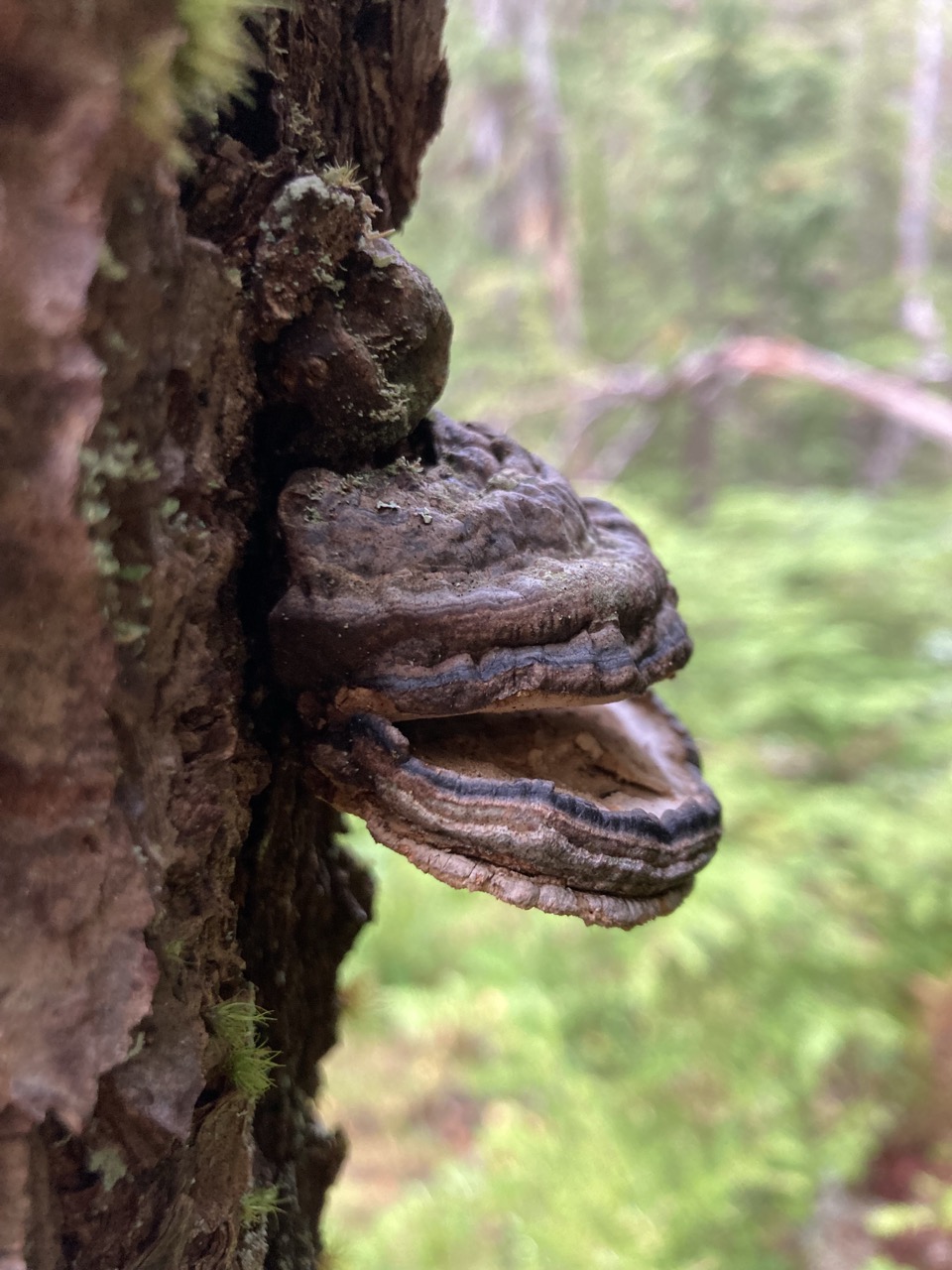
There is much ongoing research and development into other natural body disposition methods. Viable, legal and available options in limited states currently include human composting or natural organic reduction and alkaline hydrolysis or aquamation. Other disposition options have been proposed to aid and/or speed up the body’s decomposition, such as the mushroom suit, in which fungi are used to accelerate the process. It is certain that additional disposition technologies and methods will be developed in the future with the continued demand for environmental-friendly options.
In Western countries, we feel that we are onto something new with green burials, yet, they have been the practice throughout human history and still are in many regions of the world in contrast to modern Western burials and funerary customs. Natural burials are consistent with many people’s cultures, religions, traditions and geography.
For instance, natural burials are firmly rooted in some religions. Both Judaic and Islamic teachings emphasize simplicity, humility and an eco-conscious return to the earth. According to Jewish law and customs, cremation and embalming are not allowed. The body is ritually washed, shrouded and buried in a plain, untreated wooden casket within 24 hours of death. The Islamic faith also doesn’t allow coffins or burial caskets. Instead, after ritual washing and shrouding, those burying the body will gently lay their loved one in the grave with their right side facing the direction of Mecca.
In other parts of the world, “returning to the earth” does not involve burial in the soil. An ancient and still common Buddhist tradition is the Tibetan sky burial. After death, the body is usually kept at home for a few days while lamas or monks perform rituals and prayers. Then the body is transported to the high mountains, close to the heavens, and chopped up into small pieces by a burial master. The parts are laid out, and vultures and other scavengers come and consume the body. Sky burials are considered a spiritual practice. In Tibetan Buddhism, reincarnation is the belief. Once the spirit has left the body, what remains is just a shell. Using one’s own body to feed the wildlife is seen as an act of great dana(charity) showing the Buddhist virtues of metta (loving kindness) and karuna (compassion). It is viewed as a final act of generosity. This will also aid the person in achieving nibbana (nirvana).
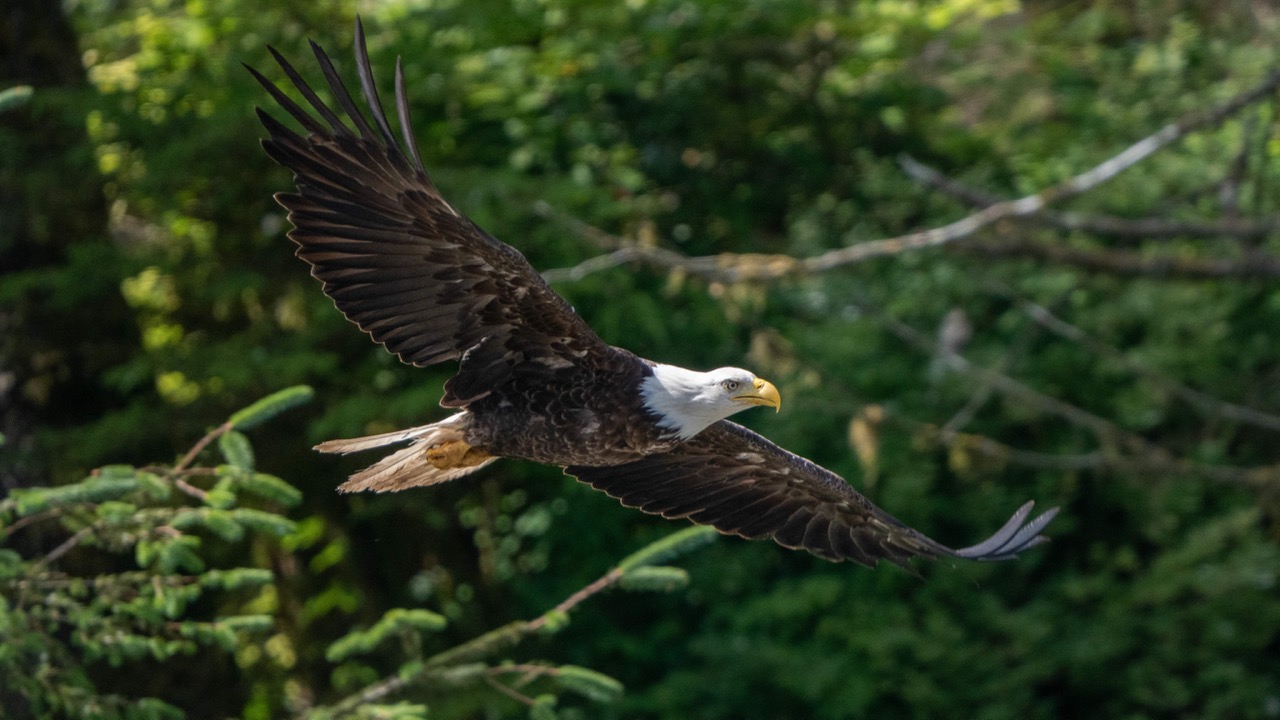
Placing the body where it may be eaten by scavenging animals or weathered by nature to its basic elements has been held by many cultures to be the most desirable form of disposal for spiritual as well as logistical reasons. The preferred body disposal method for Zoroastrians (the people from pre-Islamic Iran) is by exposure to sunlight and birds of prey, where the body is placed in a dokhma, a circular stone tower, open to the sky. Zoroastrians believe that a corpse is contaminated by nasu (decomposition) and must be disposed quickly without coming into contact with fire, water or the earth. North American Native Americans used trees or scaffolding in trees to support the body. Trees were used to protect the dead from wild animals, such as bears and wolves, and for the deceased’s spirit to be closer to the spirits of the birds and sky. The use of burial trees was also once a common practice amongst the Balinese, the Naga people and certain Aboriginal Australians.
Many other cultures embrace the use of water in their rituals for the dead, symbolizing their connection with this element of nature or to the place where the people lived. Water burials were once common and involved placing the dead in a boat, ship or raft, and set adrift. This was mainly practiced by seafaring cultures in Europe, Asia and the Pacific Islands. And while this type of sea burial has been popularized as part of Viking folklore, there is little evidence to verify that this was a genuine Norse practice. In the United States, burial at sea, where the human remains are placed in ocean waters, is permitted and regulated by the U.S. Environmental Protection Agency.
The popularity, use and attitudes towards cremation are constantly shifting. In India, burning the bodies of the dead is an ancient rite and practice and is observed among Buddhists, Hindus, Jains and Sikhs. The body is washed, dressed, placed on a pyre made of wood in the open air, and lit on fire. The cremation ceremony and rituals are usually completed within a day of death. In Hindu cremations, the ashes and any human remains are collected afterwards and consecrated in a body of water, such as the Ganges River. This act symbolizes the return of the elements to nature. While this practice uses only natural resources and is a return to nature, the number of deaths in India and elsewhere have stressed the surrounding environments, both in terms of the need of wood for fuel and the pollution created by the combustion process and placement of human remains in nearby waters. In Varanasi, the holiest city along the Ganges, an estimated forty thousand bodies are cremated every year and deposited into the river. The sheer number of human remains and half-burnt bodies placed in the river has contributed to the Ganges becoming one of the most polluted rivers in the world today.
Historically, Western countries were slow to accept cremation. However, addressing the needs of Hindus and Sikhs who died abroad and the development of indoor crematoriums in Europe were significant factors in the spread of cremation outside India. Now it is the most popular method of body disposition today, more so than traditional burial. According to the National Funeral Directors Association 2023 report, the cremation rate in the United States is projected to be 60.5% and the burial rate is projected to be 34.5%. This means that people are choosing cremation almost twice as often over burial. But, the report also shows a rise in the interest of green burial options by consumers, up to 60% in 2023.
Despite misconceptions, cremation is not an eco-friendly disposition method. Cremation today is a high energy, fuel-driven process with high carbon emissions. An average cremation lasts two hours at temperatures of 1,200 to 2,000° and releases approximately 535 pounds of CO2, which is the equivalent of driving 609 miles in a car. Crematoriums also emit toxic pollutants, fine particulates and mercury from the combustion process into the air. While cremations are a huge improvement over traditional burials, modern-day cremations, both traditional and direct, are not natural body disposition methods nor considered environmentally friendly.
The rising demand for environmentally friendly natural body disposition methods (post-death) has grown concurrently with society’s shift and demand for better ways to die (pre-death). This new public awakening is referred to as the positive death movement, a term coined in 2013 by Caitlin Doughty, a mortician based in Los Angeles. The positive death movement encourages people to speak openly about death and dying, and embraces accepting death and decay as part of the natural world. It also recognizes that people and death are a natural part of the life cycle and encourages natural burials be conducted in a way that promotes the least harm to the environment.
A societal awakening is happening, the result of individuals awakening. The greater the number of individuals that awaken, the greater the societal shift to positive death. Therefore, it is up to each of us on an individual basis:
What will wake you up?