.jpg)
%20(1).jpg)
The story began when two people escaped as refugees from the Indian/Pakistani Partition. They didn’t know each other back then, but Masood’s parents would meet later, in London. Masood points out that their marriage was not arranged. Instead, it was a traditional romance that led to a family with two growing boys.
“We grew up in London, my brother and I, and we didn't really have a community of Indians or Pakistanis. We integrated the culture and religion that was around us. We just accepted it. But I loved music. We had music playing in the house all the time. There was a lot of the Beatles and Elvis. And then I started to formulate what I really liked; which was anything I could dance to. I was into a lot of soul, jazz and funk. Music allowed me to have a spiritual connection and a purpose; some sense of why I was here on this planet – in London – in a place that was rampant with racism. A place where I didn't feel safe.”
Masood describes a world where he felt singled out and silenced. He wanted to be invisible. He describes dancing as a source of self-expression: “Joy came through music. When I was about 14, I started going to underage disco clubs where I could just dance and move my body.
I could feel this spiritual connection with music. For many years, that was really the only thing that kept me going through life. Whatever was going on in the world, as long as there was music and I could move, I could feel a sense of belonging – a sense of purpose. I could understand the messages within the music even if there were no words. The syncopated rhythms, the melodies and counter-melodies made different parts of my body move. My legs would be doing one thing. My hips would be doing one thing. My hands would be doing another thing. My head would be doing something else. And I'd be in this ecstatic bliss of dance.”
Having found healing through music, Masood yearned to play an instrument. His school offered guitar lessons, but he couldn’t afford to buy a guitar. He explains, “By that time, my parents were divorced. It was just my mom and we were living in government housing. We didn't have any money at all, I couldn't go to music class. Instead, I would go to the library and pick up classical records–anything I could find with sheet music. I'd listen to the record and follow the dots and lines of the score. It was such a slow process of learning how to read music.”
“My mom said, ‘The Sufis, they're into music, but they're kind of like hippies.’ I thought it was ridiculous. I just wanted to listen to music. I wanted to feel connected to my parental spirituality, but I just couldn't do it through their gateways.”
The plan was for Masood to attend University and study Pharmacy. Instead, he entered the unexpected world of high-fashion modeling. He walked the runway for celebrated designers: Yohji Yamamoto, Jean Paul Gaultier, Thierry Mugler, Dior, Hermes, Balmain, YSL and Valentino. He shot editorials for GQ, Vogue Homme and Mondo Uomo – to name a few.
“People appreciated me for how I looked. That experience was so opposite from what it was like growing up in London when I was just trying to survive. Now they were saying, ‘Yes, we love how you look. Move, dance, be crazy, do whatever you want. Be free. Be you.’ I was thriving in it, and I was getting paid.”
At last, Masood had money to buy a guitar. Instead, his first purchase was a washing machine for his mom. See what I mean? – Generous.
“...Then I bought a guitar. I was traveling the world with a very heavy suitcase full of cassette tapes and guitar books. That became a bit impractical, so I decided to learn to play the harmonica.”
.jpg)
.jpg)
%20(1).jpg)
%20(1).jpg)
The plan was for Masood to attend University and study Pharmacy. Instead, he entered the unexpected world of high-fashion modeling. He walked the runway for celebrated designers: Yohji Yamamoto, Jean Paul Gaultier, Thierry Mugler, Dior, Hermes, Balmain, YSL and Valentino. He shot editorials for GQ, Vogue Homme and Mondo Uomo – to name a few.
“People appreciated me for how I looked. That experience was so opposite from what it was like growing up in London when I was just trying to survive. Now they were saying, ‘Yes, we love how you look. Move, dance, be crazy, do whatever you want. Be free. Be you.’ I was thriving in it, and I was getting paid.”
At last, Masood had money to buy a guitar. Instead, his first purchase was a washing machine for his mom. See what I mean? – Generous.
“...Then I bought a guitar. I was traveling the world with a very heavy suitcase full of cassette tapes and guitar books. That became a bit impractical, so I decided to learn to play the harmonica.”
He was drawn to the rhythm and blues of Western music. It provided a spiritual portal, a connection to something unknown; but he yearned to experience something even deeper. Then he heard Sufi Qawwali singing of Nusrat Fateh Ali Khan. Amazed, he asked his parents why they had never played that music at home.
“They would say, ‘Oh, that's just for the “hippie type” of people. They think they're Muslims. They're following Islam, but it's different. I heard this as just more prejudice but within our own culture.”
When Masood discovered yoga it was the beginning of a new beginning. He describes yoga as a whole new level of embodied experience – something even deeper – than what he had found through dance. He turned his attention to holistic wellness, meditation and reiki. Then, he began integrating those practices with his music. It was an experiment in the healing power of energy and sound.
“We were practicing constantly. We wanted to know: ‘Is it music and drugs that make people excited and happy? Or could we get to the same ecstatic place with meditation and positive energy?’”
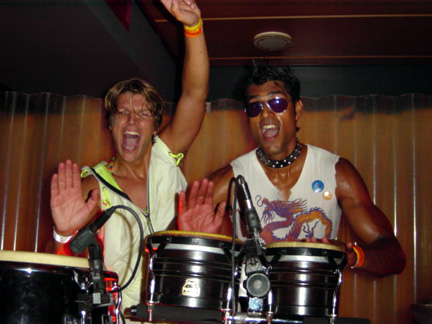
“I was living in Amsterdam and totally into the whole music club wave. I was in a drumming band with a friend. We would go to the back of the club, meditate for 15-20 minutes, and then go out and perform with the DJs. We intentionally sent energy out to the people in the audience. We would see people stoned or drunk and flopping around, and we would blast them with energy. They would instantly perk up and become lighter.”
.jpg)
“[A friend of mine] was into Siddha Yoga and a devotee of Gurumayi. She introduced me to one mantra and a very particular way of singing it: ‘Om Namah Shivaya.’ I repeated it over and over. It completely opened me up and I started crying. I had so many emotions. I didn't know why. I can only assume that any person could have a similar experience if they are at the right time in the right place to receive it: either from their own need, by curiosity or by a divine cosmic synchronistic experience.”
“I was playing music for Shiva Rea, Saul David Ray and Govindas and Radha. These were all big yoga teachers in the Bhakti Yoga scene of LA. I provided the instrumental music. Other people would sing. And then one time I was doing a class for Shiva Rea and she's like, ‘Now Masood is going to sing.‘ I didn't even know what to sing. I’d heard the mantras, but I didn’t know how to sing while I was playing. I was completely floored and embarrassed. I was like, ‘Wow, I guess there's another level I should go to. And I just wanted to know: ‘Can I sing?’ So I looked for a singing class and found Vocal Yoga.”
“OM is the mantra I always activate first for myself or others because you don't have to overthink it. You don’t have to worry: ‘Is this a religion that I'm getting trapped into or some big long journey of Sanskrit that I don't want to go on?’ OM. Everyone can feel it. Everyone can feel a vibration.”
“The mantra that took me by surprise was the Gāyatrī Mantra. I loved it before I knew what it was really about. Then I got a beautiful translation from [Sanskrit teacher] Sreedevi Bringi and I was like, ‘Wow, okay! Now I understand why this is so powerful.’ It connects the different gunas, the different worlds. I can expand to embrace all those worlds – the visible, the invisible, the manifest, the unmanifest – everything in our world.”
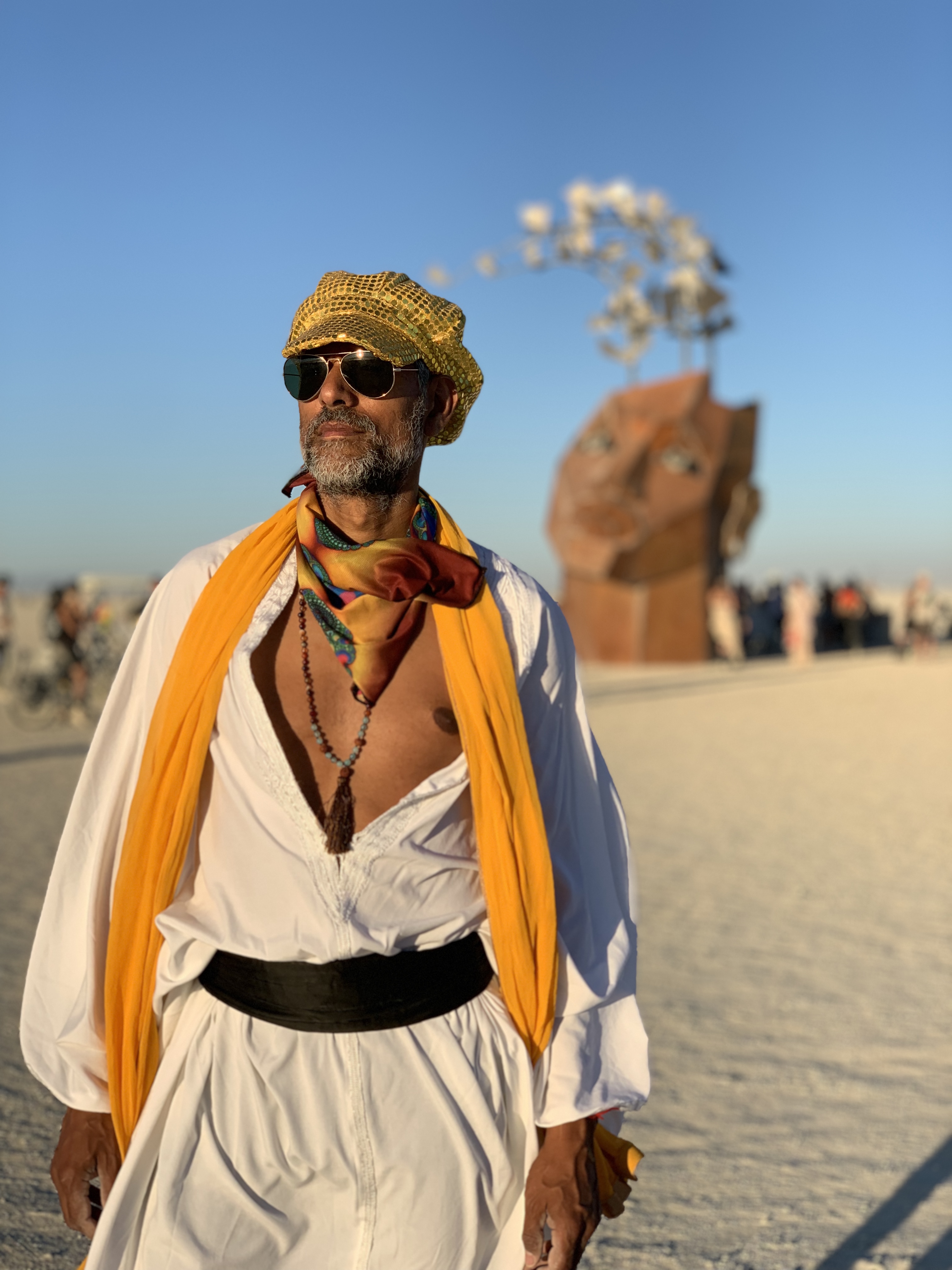
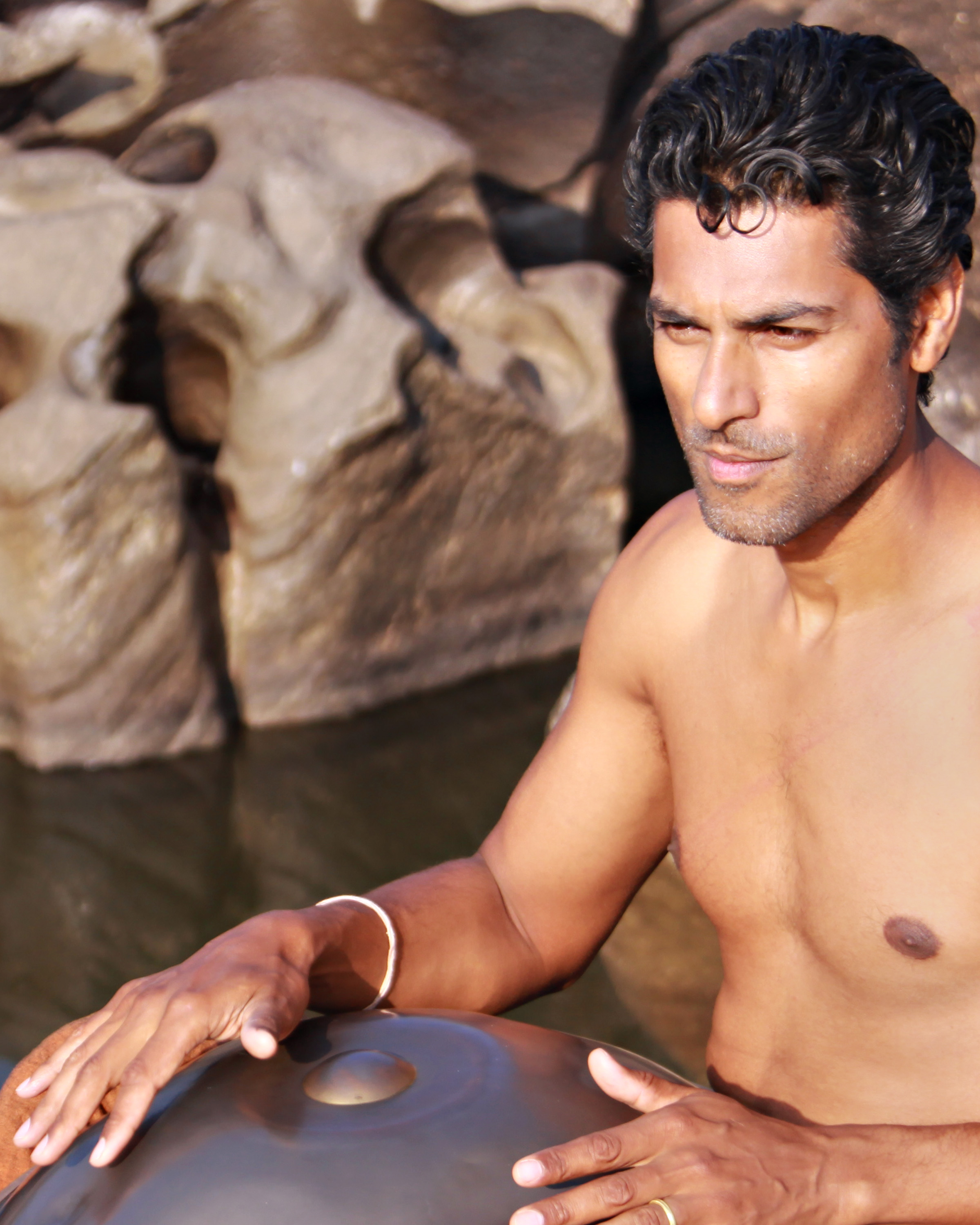
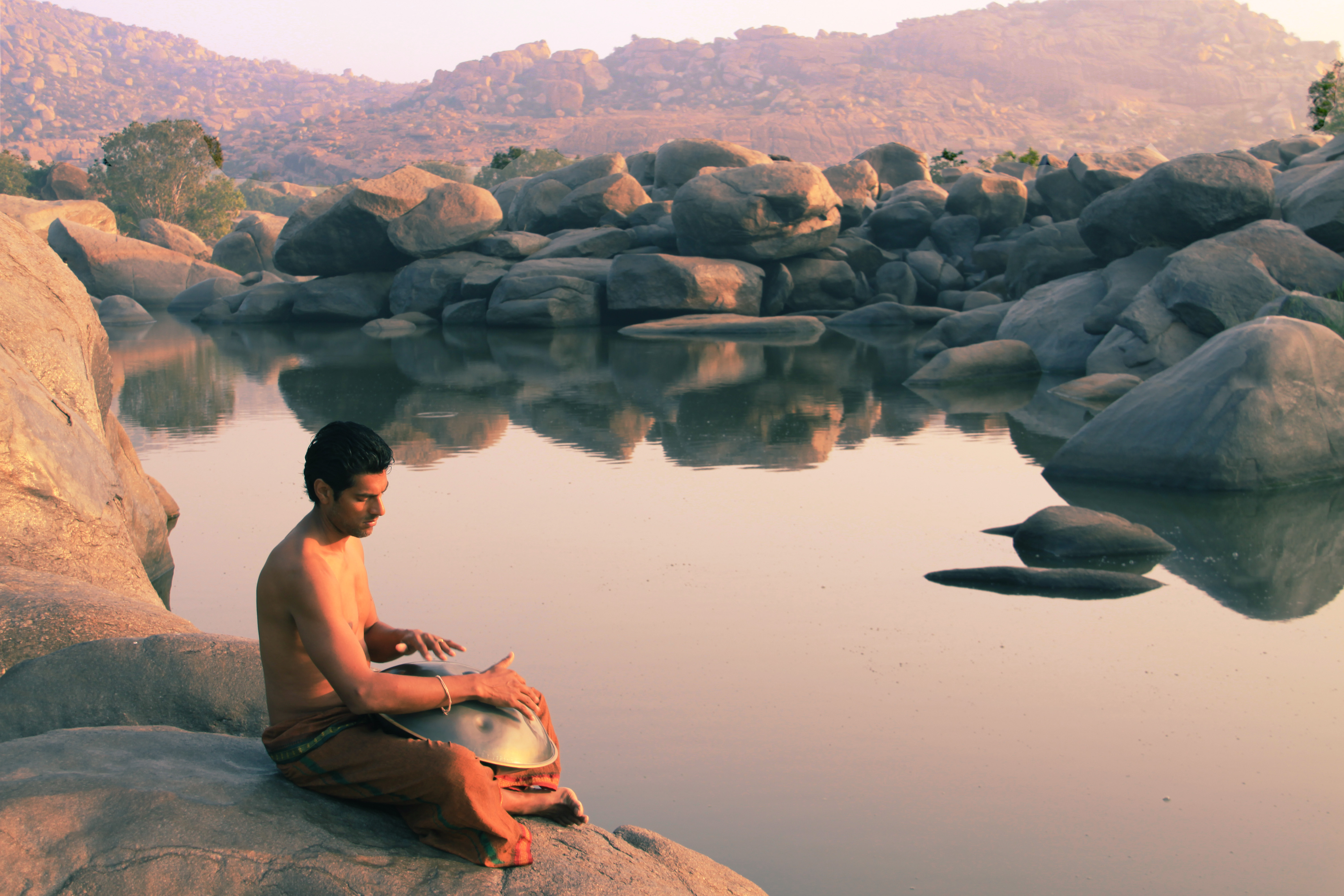
Eventually Masood made Los Angeles his home. His music became a popular soundtrack to the Santa Monica yoga scene. He produced a series of albums called “The Yoga Sessions,” from the acclaimed producer, Duke Mushroom. He also became a regular presenter at the annual Bhakti Fest’ in Joshua Tree, CA. sharing playbills with acclaimed Kirtan artists such as Krishna Das, Jai Uttal, MC YOGI and Donna DeLory. Throughout this time, he realized personal healing and transformation through his own music.
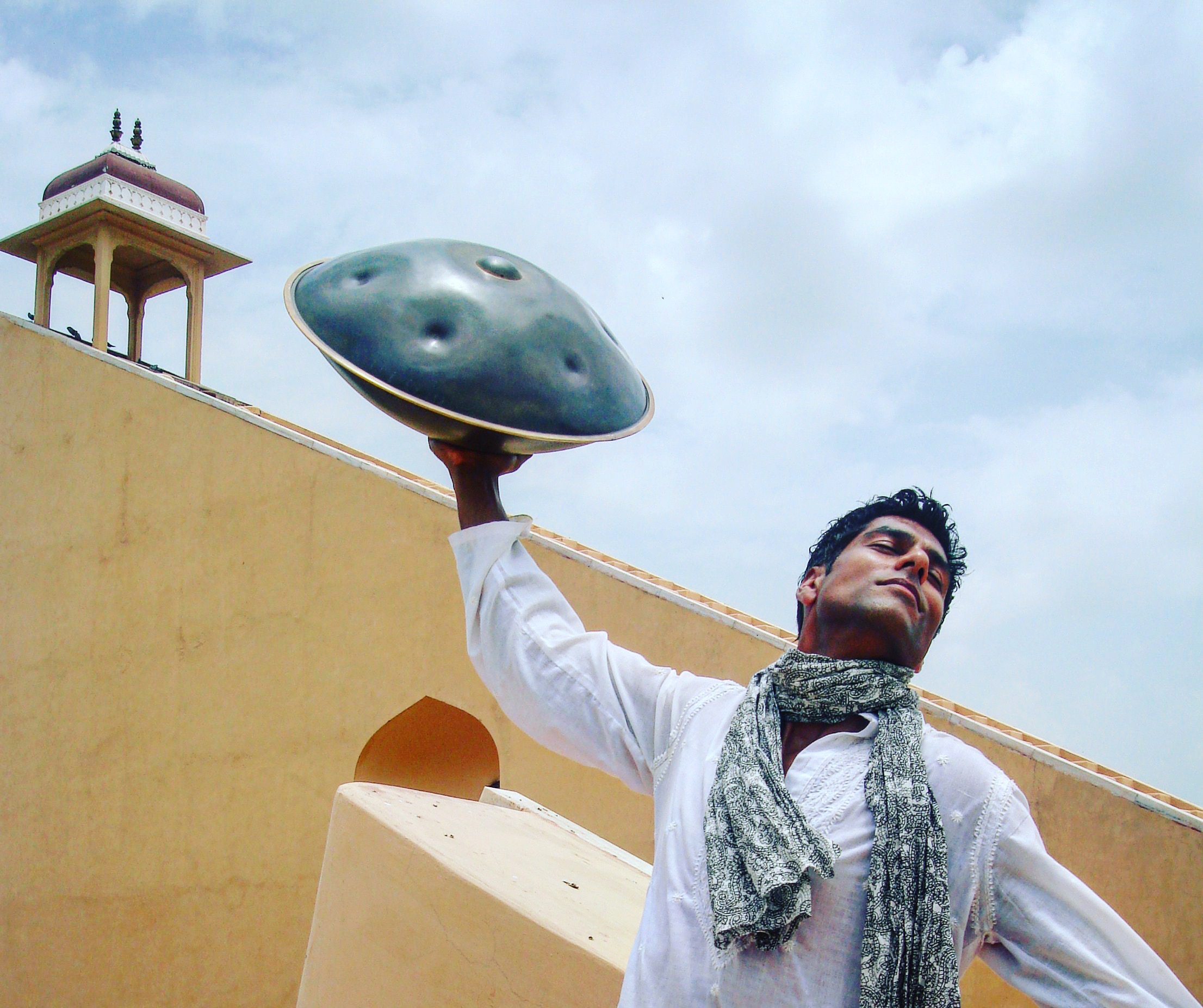
“Singing and playing required so much mental focus, calm and connection to Source. It was like praying. It supported me through my challenges. I realized that if this was doing so much for my own life, it must be useful for somebody else. I didn’t know when or who it might be. I didn't need to know as long as I could just transmit the mantra – transmit my connection to the Source through all of the energy work, the meditation, the music of the handpan – to the people in the room. However much I could hold it together and do all of that, I felt I was being held in some energetic flow and service to humanity.
That is what it felt like when I used to dance with music in London and Amsterdam. To just expand. To not feel the separation or categorization of people – likes, dislikes, religions. To just let it all be fluid. To feel no walls or boundaries or borders; that everyone is just pure Love flowing in a creative way.
That's how life should be: acceptance and appreciation for the creative Love flowing through people. It gave me a record – constant confirmations – of how I want to live my life. The different mantras, the yoga practices – every experience made me remember a place of expansive Love and creative potential. It is emanating from me and I can appreciate it from everybody else.”

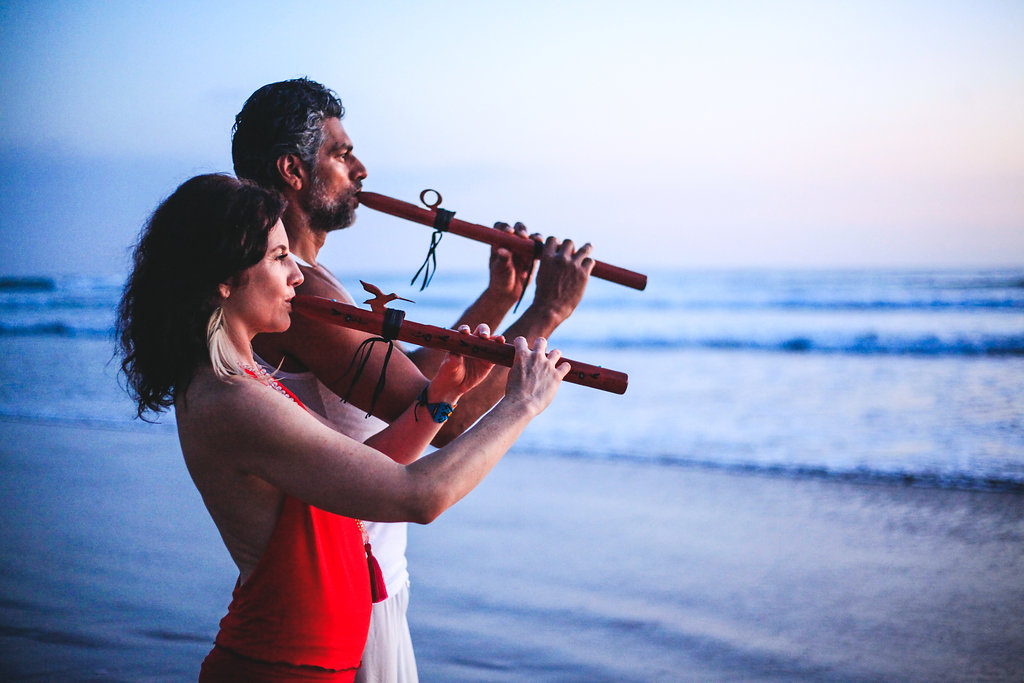
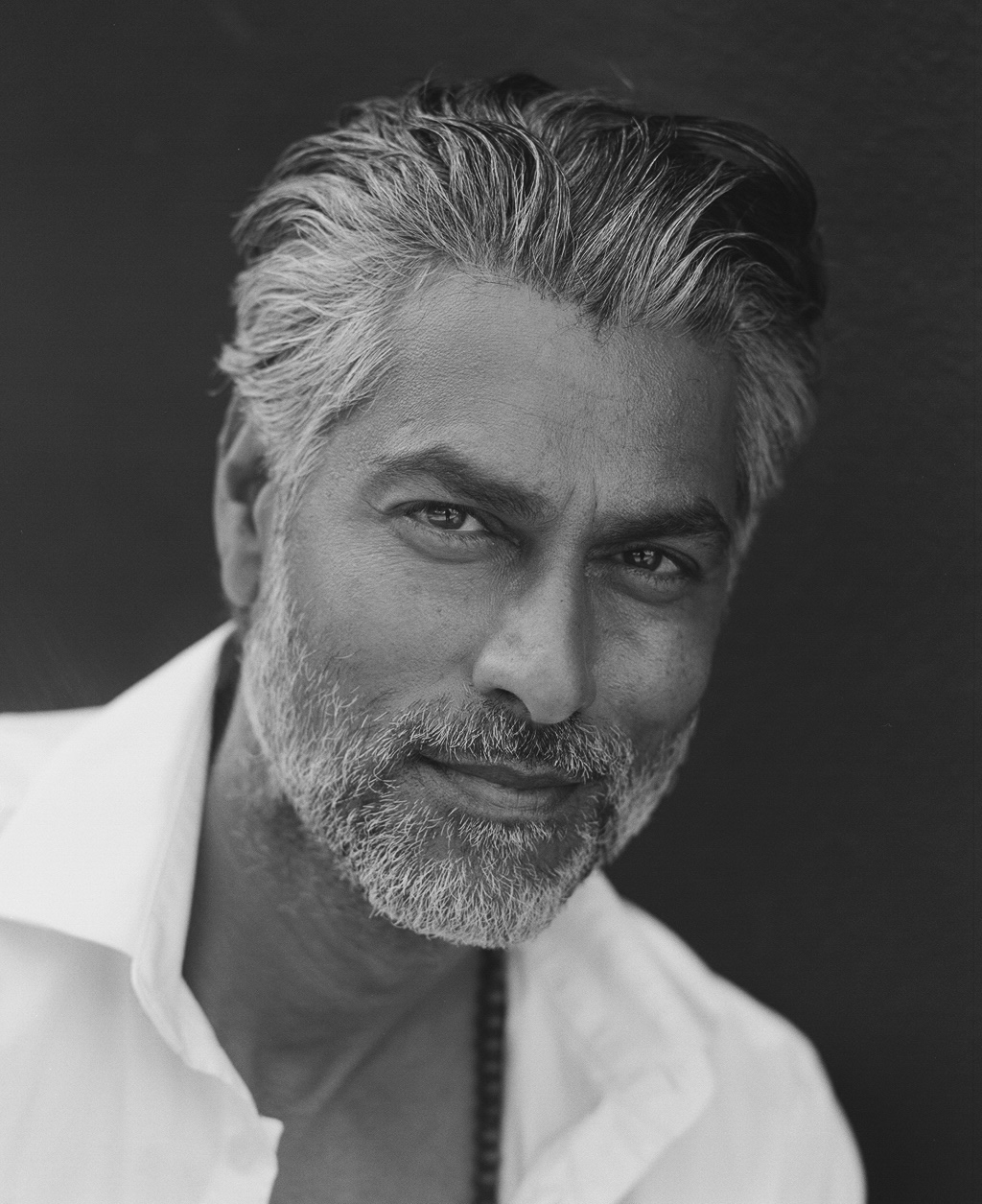
Masood offers Rasa Heart Warrior men’s group, weaving together music, mantra, movement, breath and shadow work to facilitate comfort and healing through empathy. He advocates openness, honesty and the vulnerability required to confront psycho-spiritual wounds. He sources his own healing as the greatest tool to empower others toward transformation and ultimate freedom. You can find him (often with his beloved partner, Sianna Sherman) at yoga festivals, workshops and retreats.
“We’re not just singing a mantra. We sit, breathe, connect to the Source and align our bodies. Then, we bring the mantra in. You can feel it vibrating in your heart and in the center of your brain. You can expand through the chakras, through the places where there is pain, through your hands and feet. It becomes a fully expansive – take away all the boundaries – energetic flow through your entire body.”