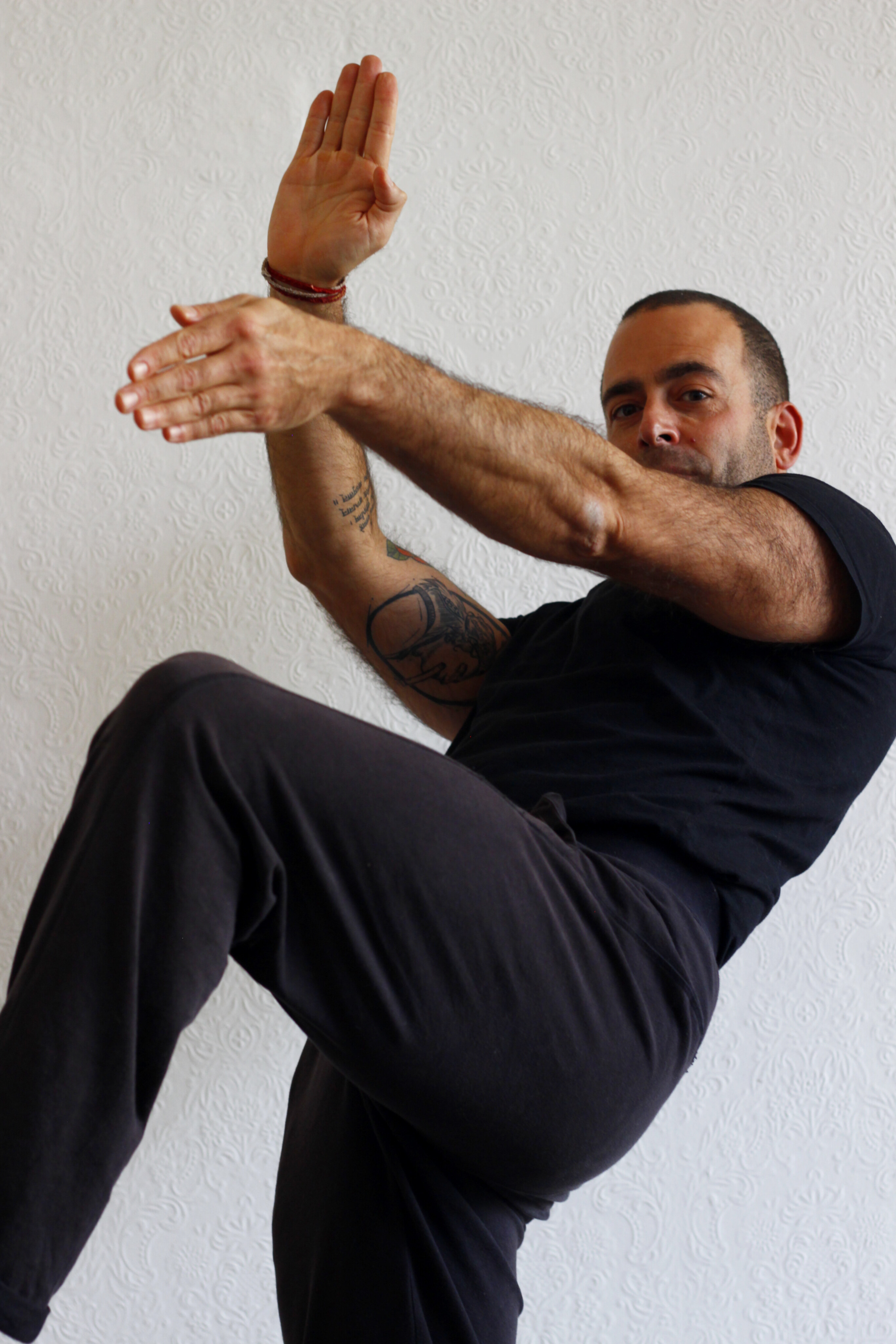
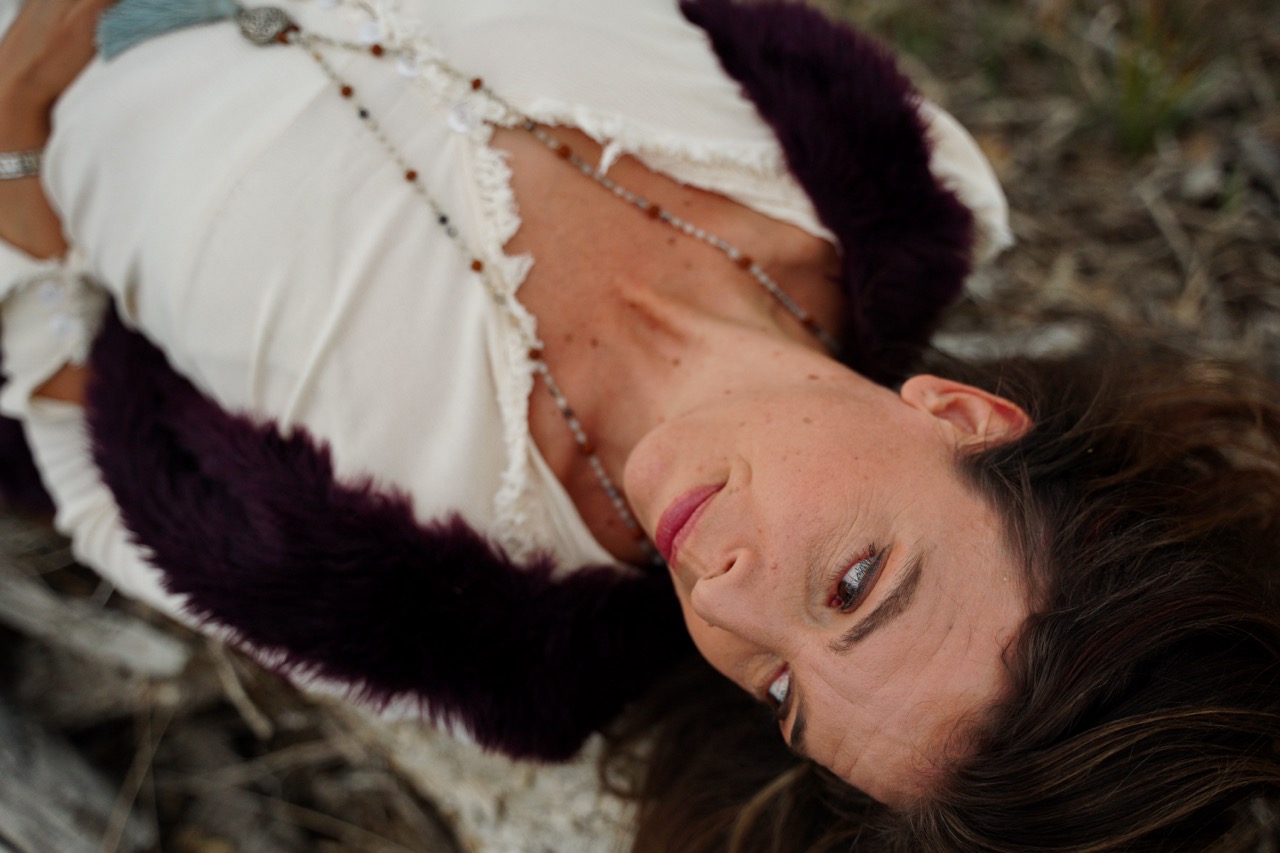
“Whatever's happening in your life is often happening in your voice. It's so fascinating to witness the way that someone's childhood trauma or heartbreak is literally present in their voice. The beauty is that if you work through those knots and patterns, you can find a new expression through your voice. Those old stories get rewritten. Your new voice can change the entire experience.” —Katie Wise
The most powerful sound comes from your own body. The tip of your tongue and your navel point are the keys to unlocking the power of sound vibration. This is the ancient Nāda Yoga. The vibration that you create in your own body is more palpable, and more powerful when it's coming from within you, just like anything else. Confidence, for instance, is more powerful when it comes from inside you, rather than trying to get it from outside.”
“Sound is powerful. The body is an instrument, a resonator channel. When you create sound inside of your body, it produces waves that vibrate the water in your body – every cell.
Everything is water. When you touch a point in the water anywhere, it ripples out. That also happens in your body. It happens in your mind. [Energy] ripples in the space around you. It doesn’t just stay inside. When you create sound, you affect yourself first and foremost. When you hear someone singing or chanting, they get the benefits first, and then it ripples out to you.
You are built with your own internal, vibrational intelligence, and everybody’s sound vibration has a different signature. It is the source of your soul and your healing potential. We are all born with a unique ‘key,’ or ‘code,’ that unlocks healing. It activates your potential, your confidence and your sense of peace.
I say ‘God’ a lot. I talk with God, saying ‘God help me,’ or ‘Thank you, God.’ Thank you is a big one. That mantra changed my life. Sometimes I’ll say, ‘God please give me the strength and endurance to get through this. Please help.’ But more times I say ‘God, Thank you for the strength and endurance to get through this,’ as if it's already there. ‘…Thank you for keeping my brother safe during his heart transplant.’ ‘…Thank you for keeping this process as smooth as possible.’ ‘…Thank you for helping my parents get through this really hard time.’
Instead of always asking, ‘God, please give them this. Please give them that,’ I like to say, Thank you.’ It makes me feel at ease –with gratitude and peace.
I like to say “Thank you” to people, as well. It just feels really good. The good feeling just spreads.”
“Music and I go way back. From the beginning, it was in my soul. And then I sort of hit this wall in my 20s, when I felt the separateness of performing. I would come off the stage and feel like people didn't even know me. It was like they'd had this experience with a character. I just felt really weird and separate; and as if it was all about me.
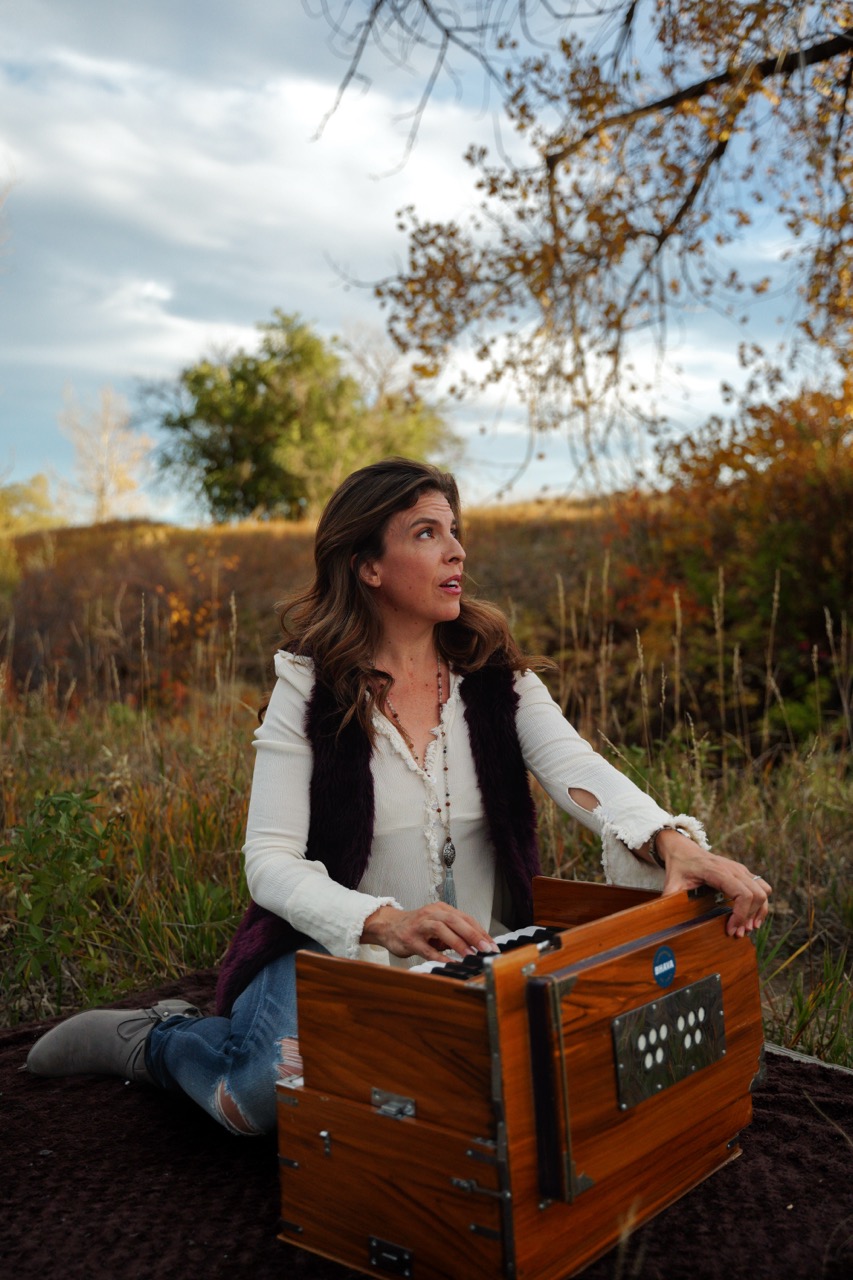
And then one night, I was looking at Facebook, and there was a kirtan leading workshop. I signed up for it on a total whim. I had no harmonium. I really had no interest in leading kirtan. I was just curious. So I borrowed a harmonium from a friend and showed up.
The first assignment was to play a little drone, two notes, and chant the sound AUM, and then the room would AUM back to you. I did my little AUM by myself, and then AUM came back to me.
And I've never felt anything like that in all my years as a performer. It was like, something just felt like this fire in my heart and soul.”
%20Large.jpeg)


“When you're practicing in its purest form, the sound is just passing through you. You become like a flute of the divine. You let the winds pass through you. And then it's just like inspiration. It's enthusiasm.
You need enthusiasm for whatever you do, especially in a creative way. The root of the word ‘enthusiasm’ is from the Greek: ‘filled with the spirit’ or ‘filled with God’ or ‘filled with the divine.’ So this is what you need, especially if you want to go deep into this practice of Bhakti Yoga. It's enthusiasm. It's a practice of having an open heart…
The highest teaching is when you realize there is no separation from the Source.
When you feel like you are disconnected, when you feel alone, this is the biggest cause of pain and suffering. But when you realize through spiritual practice that you are part of the eternal whole, then whatever happens in this life is not going to hurt so bad. Sometimes it will still hurt, but not so bad.
When we find precious metal, it's dirty. We have to clean it. That's what we're doing with the practice of yoga. We're doing a process of remembering that we are all Buddhas with amnesia. We're just cleaning the stone, cleaning the stone until it shines. Nobody is better than you. We're all going to get to the same place. We're all going to arrive. It just may be on different timelines – different ages of the soul.
We're playing this game of hide and go seek. If you believe in this kind of story, life is a game of hide and seek. I believe Alan Watts likes to tell the story of hide and seek: The divine is here, but it's hidden. It’s hidden. So we're here. Once we are on a spiritual path, we're seeking until we find. We find that all this traveling to India, to there, to there, to there…it’s all just to come back to the heart. [What you seek is] already here. It's already in you. It's already a diamond. So in your meditations – your mantras – your Bhakti Yoga, put your attention here [the heart] and it will open. With practice. There's no rush. This is the beauty in the practice. There’s no rush.”

“Kirtan is devotional chanting to the divine. It is a mantra practice – thousands of years old –from mystic traditions worldwide. It is a form of Bhakti Yoga. Bhakti is a Sanskrit word for devotion. Kirtan came to the West through the music of the Beatles, Ram Dass, Krishna Das, Jai Uttal, Deva Premal and Miten. Among others, those are like the grandparents of kirtan. I have struggled with anxiety. I have a very, very busy squirrel mind and quiet meditation used to be a nightmare for me. When I found kirtan, it was like giving my puppy mind a chew toy.” – Katie
“Mantra means “mind vehicle” or "mind release.” The mantra takes you somewhere else. You transcend thought. Mantra may be a sound vibration that you resonate with, or it may be an ally, friend or deity you can experience on all levels of being. Each deity has a sound vibration you can activate for a particular energy. The mantra of the Indian goddess Durga, for instance, might connect you to your courage – your power – to the part of you that needs to let something go. It doesn’t require ‘belief.’” – Katie
“When you sing mantra, you don’t have to focus on all the technicalities of singing. You focus on the mantra in your mouth, your voice eventually tunes itself. When I chant, it feels like calisthenics for the mind. Mantra cleans and clears the mind. It makes it very fit. And very peaceful. It takes me straight to infinity. It's like there's nothing in the way. There's no extra thinking. There's nothing. It's just ‘boom.’ – Simrit
Many people begin yoga with the āsana (yoga postures) practice at a studio. It’s easy to start with the body. Maybe you’re shy to sing. Maybe you are even a little shy to chant ‘OM.’ But when you’re ready, the music of Bhakti Yoga just comes from the heart. It’s a devotional thing – a meditation. You feel different callings. As any artist or musician will tell you, the creation doesn't come from them. They don't know where it comes from. They're just there and they're open; doing nothing except having a moment of openness. – Jerome
“Chanting or singing in community is exponentially more powerful. It creates a loving and mystical space. It quickly takes me to my soul. I get to bypass all the other stuff. Some other music may be nice but it doesn't have that same ‘penetrate your soul’ kind of vibe.” – Simrit
You can sing it yourself too. That’s beautiful. But when you're doing it in the group, it becomes like a collective prayer. That's what I love about Bhakti Yoga. You’re really intertwined with everybody there. It's not just performance. When we're doing it together, you start to elevate.” – Jerome

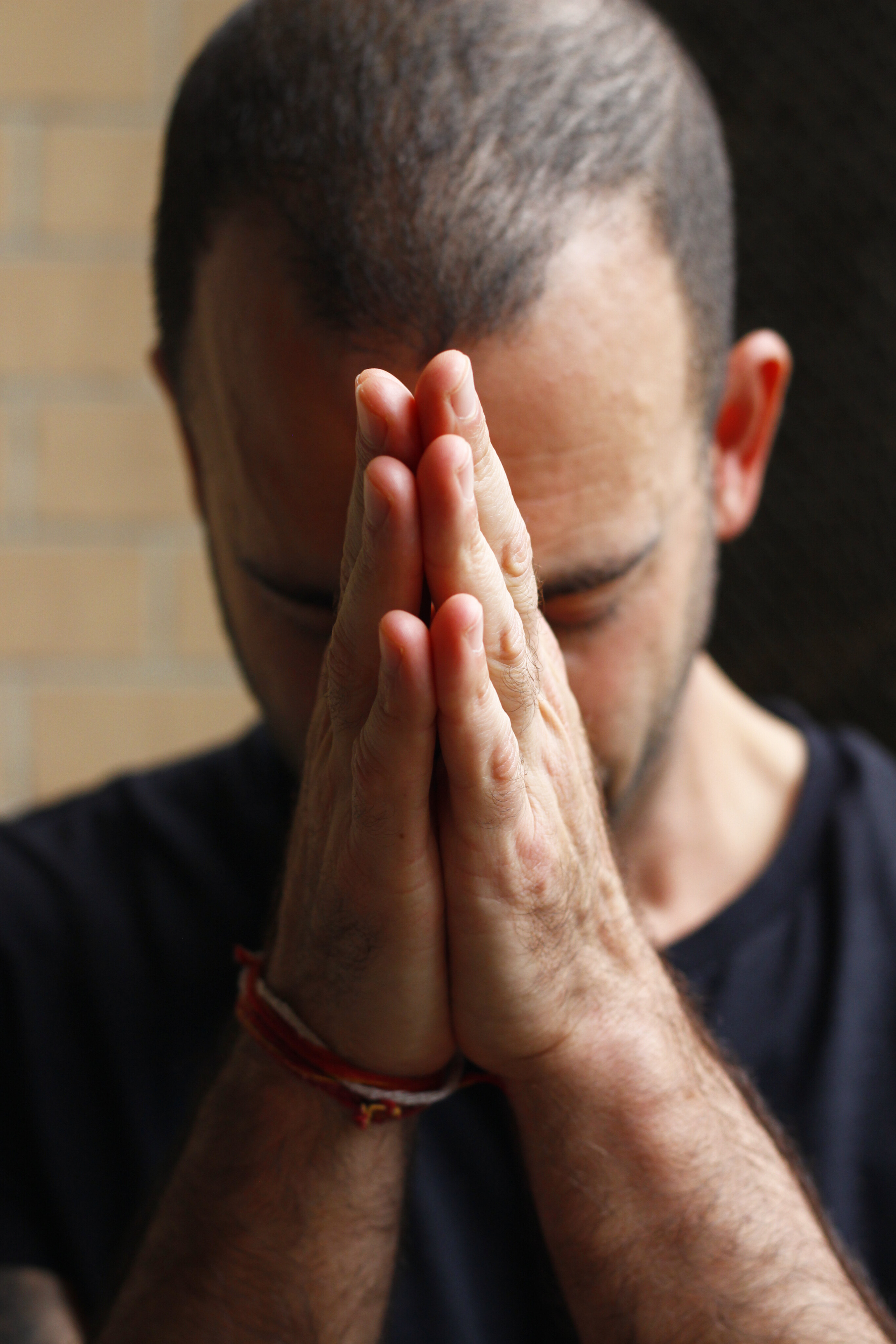
“Something unique about kirtan is that, when the chant is over, the room falls completely silent. We allow ourselves to take a moment and meet the energy we have called into the room. We want to feel it – whether it's an internal experience or a devotional experience – rather than just clapping and moving on to the next thing. There's a moment of quiet when the mind has been carried somewhere else. We get to just be, for a moment, in that new space. My drummer comes from a folk, singer-songwriter history. When she first started playing with us, she was so bewildered by the silence. She was like, ‘Are people enjoying themselves?’ Because usually there's that immediate feedback loop from applause.” – Katie
“The beauty of this practice is that it incites enthusiasm right away. It's the easiest way to get there. You can sit there and meditate for hours and only your problems come [to mind]. Maybe sometimes you get some bliss. But the silence is hard. The mantra is easy, because right away you go in. And then, after chanting the mantra for a while, you can find the silence.” – Jerome
“You have 84 meridian points at the roof of your mouth. When you speak, especially in languages like Sanskrit or Gurmukhi, the sound creates directives to the hypothalamus, which then speaks to the pituitary, which then speaks to the pineal gland. When you chant certain words, using the languages that are meant for chanting, you directly give your endocrine system instructions. You change the gray matter in your brain.” – Simrit
“Sanskrit is not easily translatable. It is a vibrational language. The seed sound for [the Indian goddess] Durga, for instance, is dūm, D-U-M. And that sound vibration is, literally, the sound of Durga coming into existence. It is the sound of that particular power. Bhūmi is not a word that signifies ‘earth.’ It is the actual sound of the earth coming into existence. Ganga is the sound of the river. Ākāsha is the sound of the sky. One of my favorite Sanskrit phrases is for the Milky Way. They call it ākāshagangā, which means sky river. In some ways to reduce it to English is almost like taking some of the magic out. Sean Johnson, who I love, is another kirtan artist. He says that if you want to know what a mantra means, sing it. It is something you can feel.” – Katie
“Studies at Universities, like UCLA, examine mantra and meditation and their effect on the chemistry of your brain. Mantra creates new neural pathways in the brain. The neurons talk with each other, activating neural plasticity. This has been happening for thousands of years, but science is starting to scratch the surface of what mantra does. Scientists can explain it, but you can feel it from firsthand experience. You feel different when you chant.” – Simrit
“I don't have to know where it's coming from or why it works. All I know is that it works. It's a practice of experience. I stick the plug in the wall, and the light goes on. I don't care how the light came on. It works. You can be a person who wants to know the circuitry and how the light works. But why? When I want to move my finger, I think about it and it moves. I don't care how that happened. It happens. So you have to have a little bit of faith in the process and just enjoy the experience.” – Jerome